
Zebra game strategy: tips for higher scores
Higher Zebra scores come from answers that are both accepted and uncommon. The tips below follow directly from the game’s rules. They are our analysis, not inside knowledge.
The one rule: rarity is assigned, not chosen
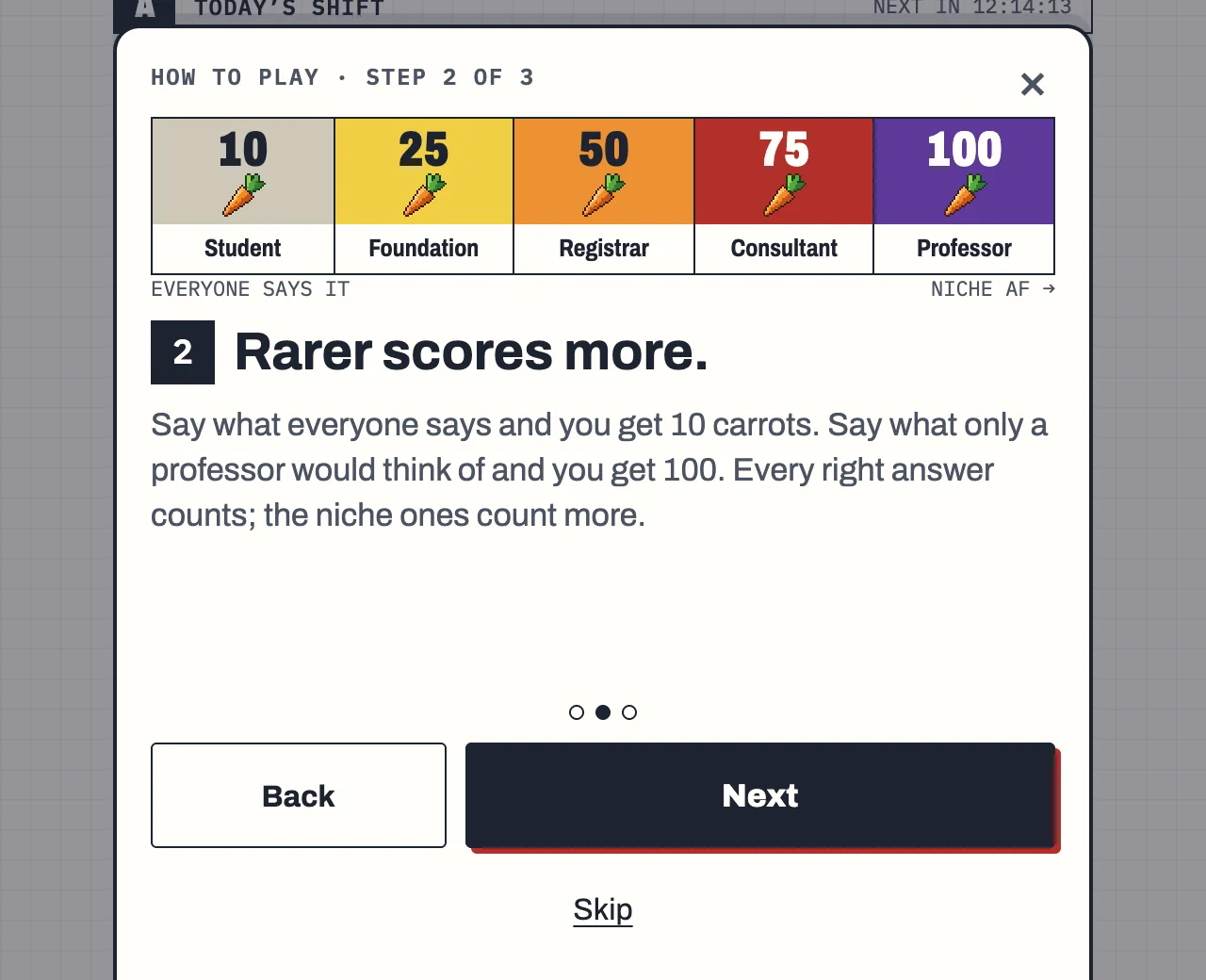
Before a shift opens, the editors list the acceptable answers for each bay and rate each one, from Student (10 carrots) to Professor (100). You never pick a tier. The only lever you have is which correct answer you type.
Read the prompt’s category
Every prompt asks for one kind of thing: a cause, a drug, a sign, an organism, a score, a structure. Spend the first two seconds on that. A rare answer of the wrong kind is simply refused, and you lose time you could have spent on a second idea.
Think one layer past the textbook answer
- Consider whether your first answer has a less familiar, equally valid alternative; this guide cannot predict the editor’s tier.
- A specific second-line drug or named syndrome may be worth considering when it fits the prompt exactly; no higher score is guaranteed.
- Be specific: name the single drug, organism or structure, not its family.
- Never invent. A made-up term is not on the sheet, and a vague one rarely is.
Use the clock, not the delete key
Wrong answers do not end a bay: you can keep submitting until 30 seconds are up, and close spellings count. So submit your best idea quickly and keep a backup ready. Retyping one long word to perfection wastes the seconds that a second answer could have used.
What 340 actually requires
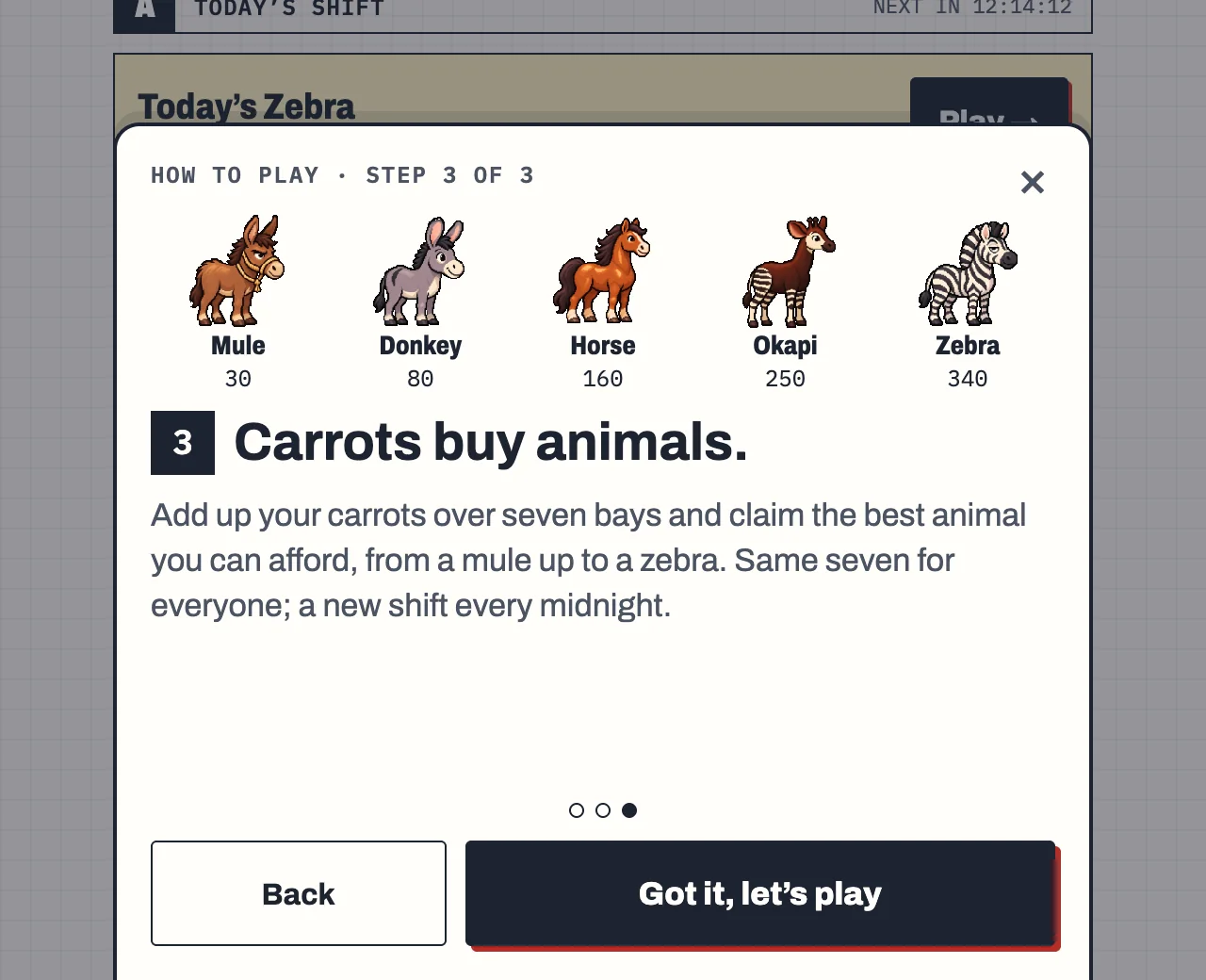
The Zebra animal needs 340 carrots. That is a lot less than perfect:
| Plan | Seven answers | Total | Animal |
|---|---|---|---|
| Steady | 7 × 50 | 350 | Zebra |
| Two big hits | 2 × 100 + 5 × 25 | 325 | Okapi (15 short) |
| Three big hits | 3 × 100 + 4 × 10 | 340 | Zebra, exactly |
| Mostly safe | 1 × 75 + 6 × 25 | 225 | Horse |
| One miss | 6 × 50 + 0 | 300 | Okapi |
A day of solid mid-tier answers beats a day of long shots with misses. One unanswered bay costs you everything it could have earned, so on a bay where nothing rare comes to mind, take the common answer.
Practise without wrecking your ranked attempt
Only your first go at the daily shift is ranked. Replays after that, past shifts and the practice sets in the paid Archive are all unranked, so they are where to test an approach. See the archive page for what is free and what is part of the $5 unlock.
What not to do
- Do not type patient details; the game asks players not to.
- Do not treat accepted answers as clinical guidance; the game is not a revision authority.
- Do not spend the whole 30 seconds on one spelling.
- Do not assume a synonym or abbreviation will be accepted; only close spellings are promised.
Point values are on the scoring guide; question types are on the answers guide; the basics are on how to play.
Questions
How do I get more carrots in Zebra?
Give specific answers that fit the prompt exactly and go one step past the first textbook answer: consider less familiar but valid alternatives; only the editors’ list determines a particular answer’s tier.
Can I choose a high-risk, high-reward tier?
No. You type an answer and the editors’ rarity rating for that answer decides the tier. There is nothing to select.
Should I play the Archive before the daily shift?
The Archive and replays are unranked practice, so they are a safe place to try ideas. The daily shift only counts your first attempt, so warming up elsewhere does no harm.
Sources
- playzebra.io FAQ · checked 25 November 2026
- playzebra.io home page (rules strip, tiers, stable, today’s shift) · checked 25 November 2026
- playzebra.io terms of use (Archive, payments, refunds) · checked 25 November 2026
Updated 25 November 2026